

CONVERGE Team
Meet The CONVERGE Team
Our team includes researchers, students, and affiliates who contribute to the mission of CONVERGE. We represent a range of disciplines in the social sciences, public health, and interdisciplinary studies in the hazards and disaster field. You can learn more and read our bios below. Our efforts are also supported and enhanced by collaborators at several other institutions and the larger team at the Natural Hazards Center here at the University of Colorado Boulder. If you have questions, please contact us at converge@colorado.edu.
Lori Peek
- lori.peek@colorado.edu
Lori Peek
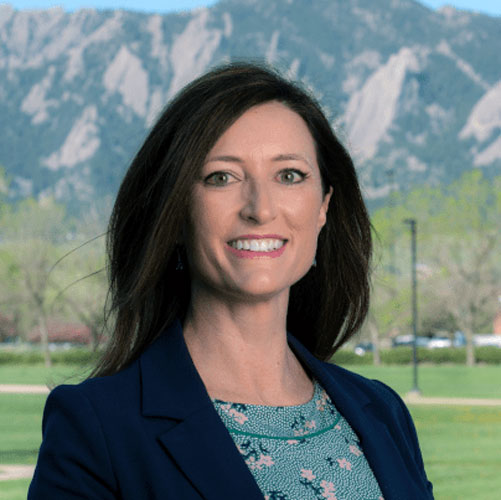
Lori Peek is the principal investigator of the Natural Hazards Engineering Research Infrastructure (NHERI) CONVERGE facility and the leader of the Social Science Extreme Events Research (SSEER) network and Interdisciplinary Science and Engineering Extreme Events Research (ISEEER) platform. She is also director of the Natural Hazards Center and professor in the Department of Sociology at the University of Colorado Boulder. Peek is author of Behind the Backlash: Muslim Americans after 9/11, co-author of Children of Katrina, co-author of The Continuing Storm: Learning from Katrina, and co-editor of Displaced: Life in the Katrina Diaspora and the Handbook of Environmental Sociology. Peek helped develop national natural hazards school safety guidance, which culminated in the publication of FEMA P-1000 Safer, Stronger, Smarter: A Guide to Improving School Natural Hazard Safety.
For a full bio, please see: https://hazards.colorado.edu/biography/lori-peek.

Rachel Adams
- rachel.adams-1@colorado.edu
Rachel Adams
Candace Evans
- candace.evans@colorado.edu
Candace Evans
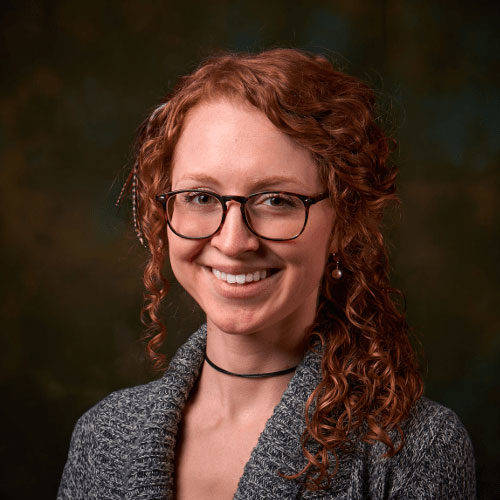
Candace M. Evans (she/they) is a research professional at the National Science Foundation-funded CONVERGE initiative and the Natural Hazards Center. Evans first joined CONVERGE and the Natural Hazards Center in 2019 as a graduate research assistant, and has since served as the co-lead developer for the CONVERGE Training Modules Series. In addition, she supports Dr. Lori Peek with the CONVERGE Leadership Corps, helping to facilitate and coordinate monthly meetings and deliverables. Most recently, Evans served as the Observation Team Lead for a two-day Tabletop Exercise at the Centers for Disease Control and Prevention in Atlanta, GA, aimed at improving the transdisciplinary coordination, data collection, and information sharing of rapid disaster reconnaissance and research efforts of the Leadership Corps. Evans, along with other members of the Observation Team, conducted observation and note taking throughout the exercise, and, following the exercise conclusion, led the development of a Summary of Conclusions that highlighted key takeaways and recommendations from the two-day exercise.
Evans is currently a PhD candidate in the Department of Sociology at the University of Colorado at Boulder. She received her bachelor’s degree in sociology and psychology from McMurry University in 2016 and her master’s degree in applied sociology from the University of Massachusetts-Boston in 2018. Her dissertation research is focused the construction of medical knowledge and expertise during public health emergencies. Evans is also actively engaged in activist and advocacy circles for chronic illness and disability rights, where she draws on sociological insights and her own embodied experiences to raise awareness for invisible chronic illness and disability conditions and the unique needs and challenges of these groups during disaster and disaster recovery.
Jennifer Tobin
- jennifer.l.tobin@colorado.edu
Jennifer Tobin
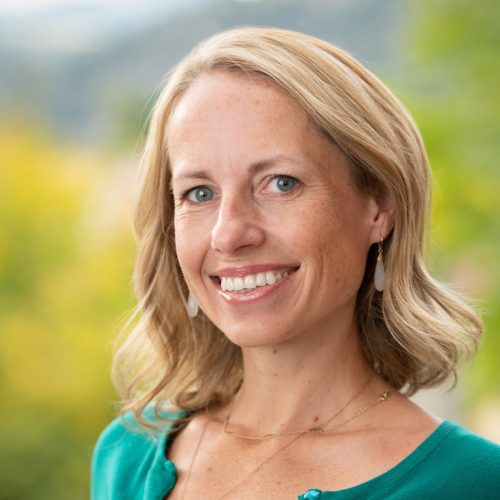
Jennifer Tobin is assistant director of the Natural Hazards Center, University of Colorado Boulder. She is a research associate for the Natural Hazards Engineering Research Infrastructure CONVERGE facility, the National Science Foundation-funded Social Science Extreme Events Research (SSEER) network, and the Interdisciplinary Science and Engineering Extreme Events Research (ISEEER) platform. Tobin is also a co-editor of the CONVERGE Extreme Events Research Check Sheets Series.
Tobin has been involved in a wide range of funded research projects focusing on topics such as children and schools, disaster risk reduction, and community resilience following disasters. Currently, Tobin is the administrator of the Natural Hazards Center’s long standing Quick Response Research Award Program, funded by the National Science Foundation. She also administers special calls for research funded by additional federal partners. Tobin is collaborating on a United States Geological Survey-funded project focused on Earthquake Early Warning and Schools and holds a secretariat position and is co-chair of the Justice, Equity, and Future Leadership Committee for the North American Alliance of Hazards and Disasters Research Institutes (NAAHDRI).
Tobin received her PhD from the department of sociology at Colorado State University. Her dissertation research focused on educational continuity following the 2013 Colorado Front Range Floods. She earned her bachelor’s in sociology and women’s studies in 2005 and master’s in sociology in 2008. Her master’s thesis research drew on qualitative interviews with local disaster recovery workers and single mothers who were displaced to Colorado after Hurricane Katrina. Tobin is the recipient of the 2014 Beth B. Hess Memorial Dissertation Scholarship.

Brigid Mark
- Brigid.Mark@colorado.edu
Brigid Mark
Brigid Mark is a graduate research assistant at the Natural Hazards Center and a PhD student in the Department of Sociology at the University of Colorado Boulder. She is the data manager for the Social Science Extreme Events Research (SSEER) network and the Natural Hazards Center’s Quick Response Research Award Program.
In 2023, Brigid earned a Master of Arts in Sociology from the University of Colorado Boulder and in 2020, she earned a Bachelor of Arts in Environmental Studies and Biology from the College of Saint Benedict and St. John’s University. Her research interests include climate justice, social movements, Indigenous studies, and qualitative research methods.
Haorui Wu
- Haorui.wu@dal.ca
Haorui Wu
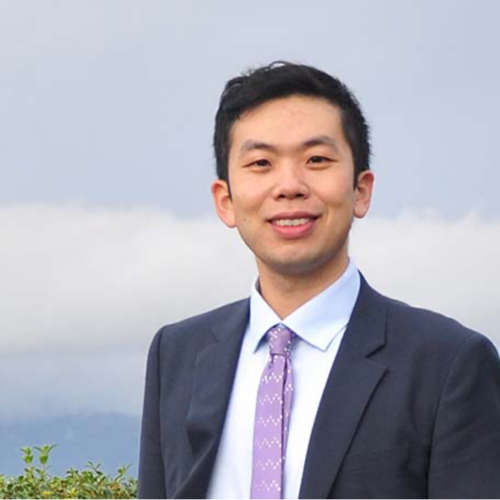
Haorui Wu is a research affiliate at the Natural Hazards Center and CONVERGE. He is the current Canada Research Chair in Resilience, serving as an assistant professor in the Faculty of Health at Dalhousie University. He earned his Ph.D. in interdisciplinary studies from the University of British Columbia, Vancouver, Canada, engaging principles of the four disciplines: social work, community and regional planning, landscape architecture, and architecture.
With the interdisciplinary background, his over 16-year community-based interdisciplinary research and emerging practice have nuancedly explored disaster-driven redevelopment of human and non-human settlements in the global context of climate change, disaster, and willful acts of violence. His research and practice are guided through the following two core values of human-environment interaction:
(i) Environmental justice: providing benefits of built environment to under-served populations (e.g., Indigenous and ethnic minorities, immigrants and refugees, low-income and the homeless); and
(ii) Social justice: empowering human dignity (especially for vulnerable and marginalized groups) and advancing their physical health, mental wellness, and overall well-being in human settlement renewal.
Wu’s innovative socio-ecological protection strategies aim to stimulate the transdisciplinary application of engineering, social, cultural, ecological, economic, and political dimensions into the empowerment of grassroots-led community development initiatives that contribute to the enhancement of inhabitants and co-inhabitants’ health and well-being, advancing resilience and sustainability at the individual, family, and community levels, and promoting equity, diversity, and inclusion in community development.
Musabber Ali Chisty
- musabber.chisty@colorado.edu
Musabber Ali Chisty
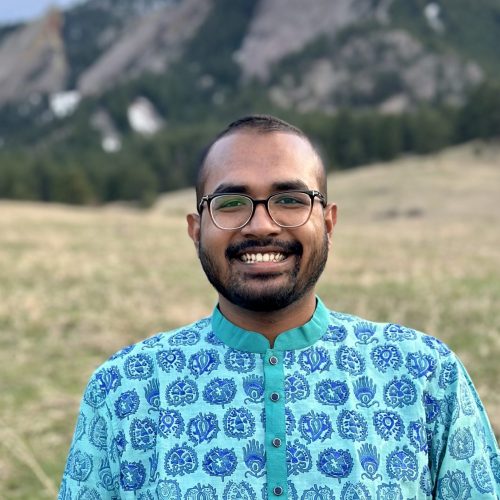
Musabber Ali Chisty is a Ph.D. student in the Department of Sociology at the University of Colorado Boulder and a graduate research assistant at the Natural Hazards Center. He also serves as the social media manager for the National Science Foundation-funded CONVERGE facility. In this role, Musabber maintains all social media outlets of CONVERGE posting to Twitter/X, Instagram, and LinkedIn. He regularly develops infographics, posters, and written posts for each of these social media outlets.
Musabber completed his bachelor’s and master’s degree in Disaster Management at the University of Dhaka Bangladesh. His main research interest is in human behavior in the disaster response and recovery period, social vulnerabilities, intersectionality, disaster preparedness, and the sociology of humanitarian organizations. Musabber has published in these areas in outlets such as the International Journal of Disaster Risk Reduction (IJDRR), Disaster Prevention and Management (DPM), Health Science Report, Plos One, Sustainability, and Water, among others.

Rachel Adams is a research associate at the National Science Foundation-funded CONVERGE initiative and the Natural Hazards Center. Her research interests include building community resilience, reducing social vulnerability to disasters, and translating evidence-based practices in emergency preparedness and response. She earned her PhD in community health sciences from the University of California Los Angeles Fielding School of Public Health and her Master of Public Health degree in epidemiology and biostatistics from the University of Southern California.
Adams joined the Natural Hazards Center and CONVERGE in 2019. She is the lead developer of the CONVERGE Training Modules and co-lead administrator of the Center’s Research Award Programs. She also contributes to several research activities that focus on enhancing the ethical conduct and practical application of hazards and disaster research.